Problem
Prove low-level system behavior across architecture, emulation, persistence, authorization, and a specific physical target without allowing broad claims to outrun evidence.
What I built
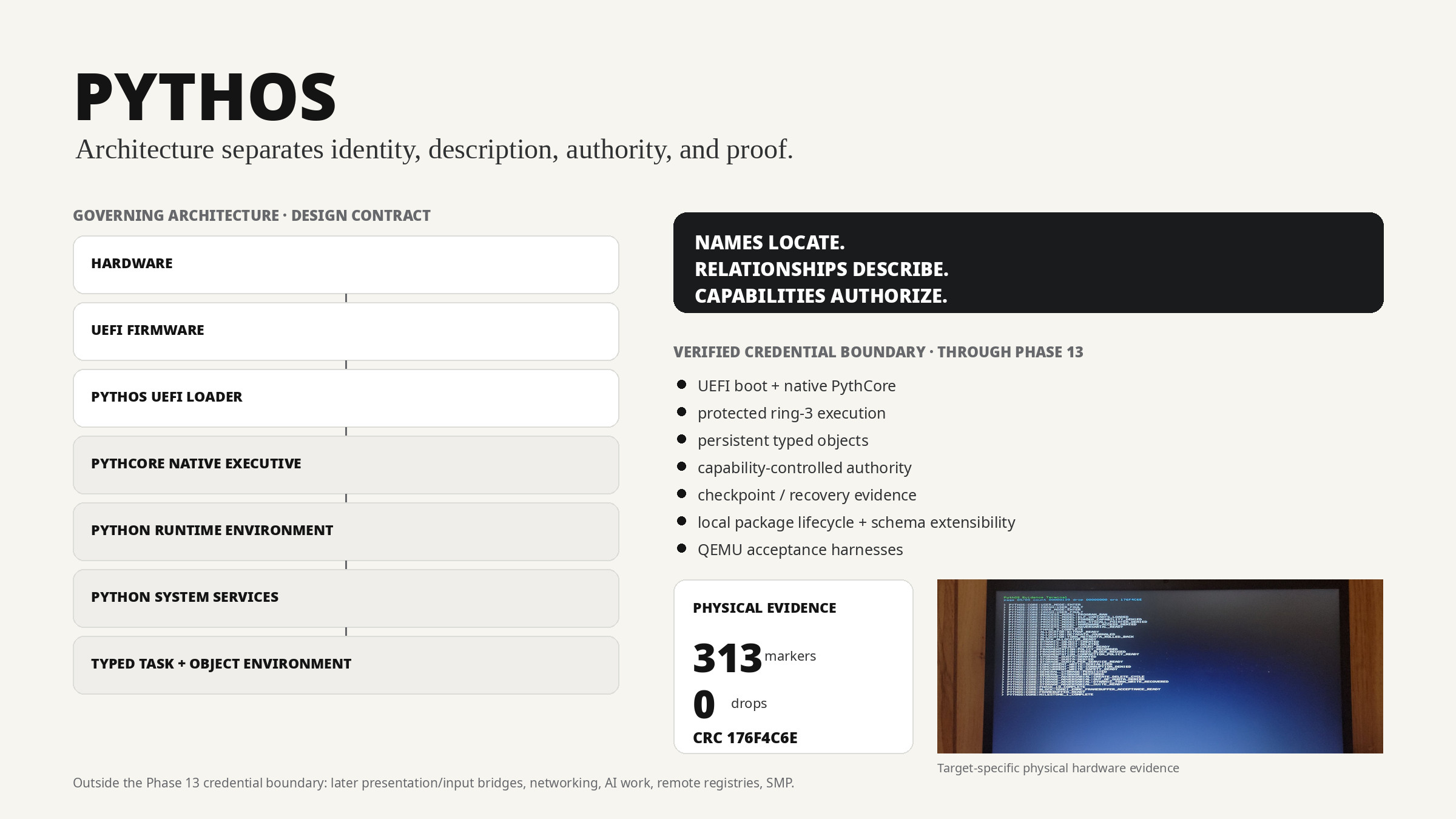
A from-scratch verification-driven x86-64 operating system line with UEFI boot, native PythCore, protected ring-3 execution, typed persistent objects, capability-controlled authority, checkpoint and recovery evidence, and local package lifecycle work through the approved Phase 13 credential boundary.
Architecture / decisions
Governing architecture
Names locate, relationships describe, and capabilities authorize. The governing design keeps identity, object relationships, and authority distinct so a locator does not become permission.
Verified implementation
Accepted implementation evidence is held apart from the governing model: UEFI boot, PythCore, protected ring-3 execution, typed persistence, recovery, and capability checks are read through QEMU acceptance harnesses.
Evidence
Physical evidence
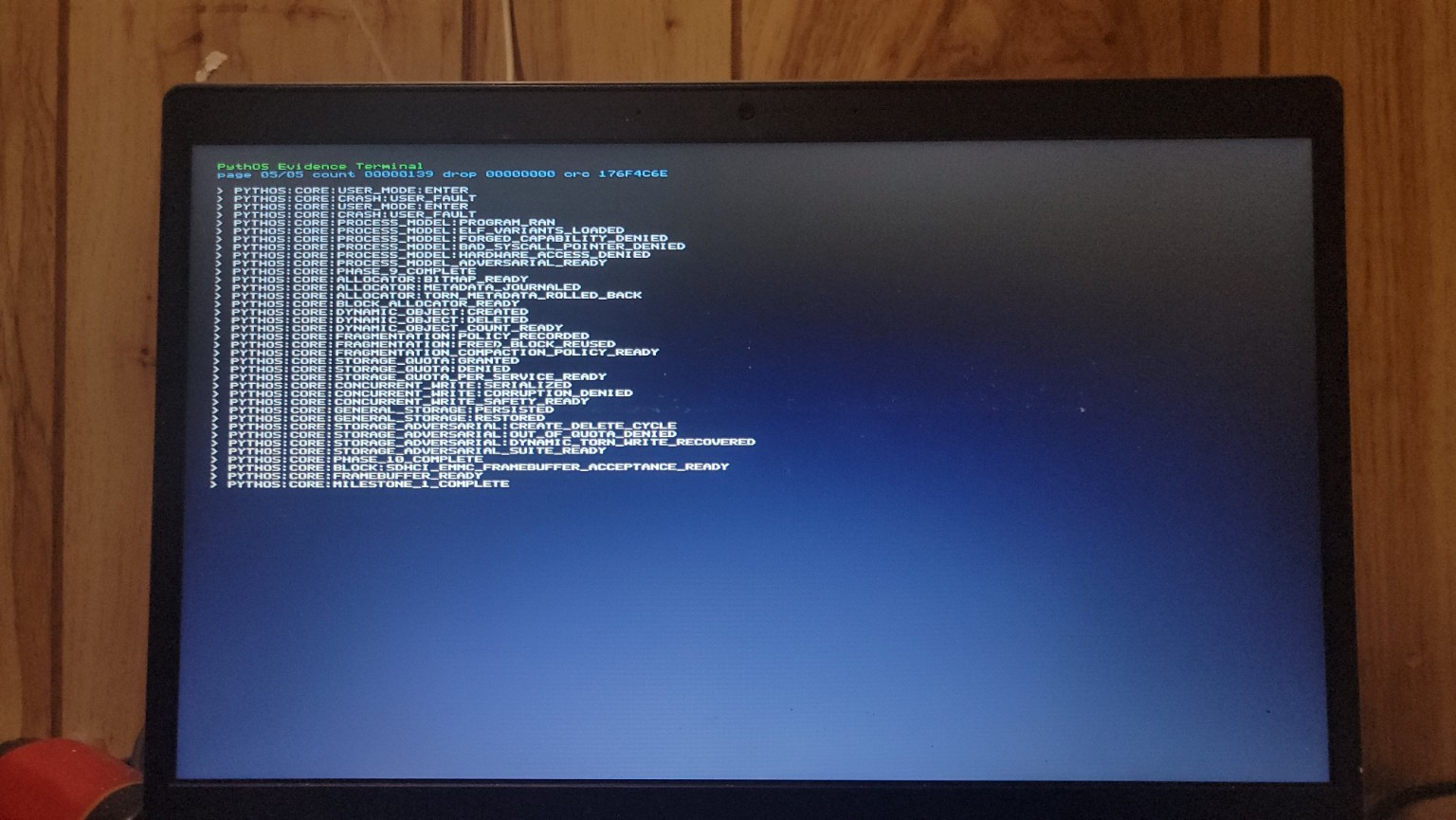
QEMU acceptance harnesses establish the emulated evidence path. The physical terminal photograph records the separately documented target-specific path; the laptop bezel stays visible because the hardware context is part of the evidence.
Result
On the documented target-specific physical evidence path: 313 verification markers, zero drops, CRC 176F4C6E.
Evidence record
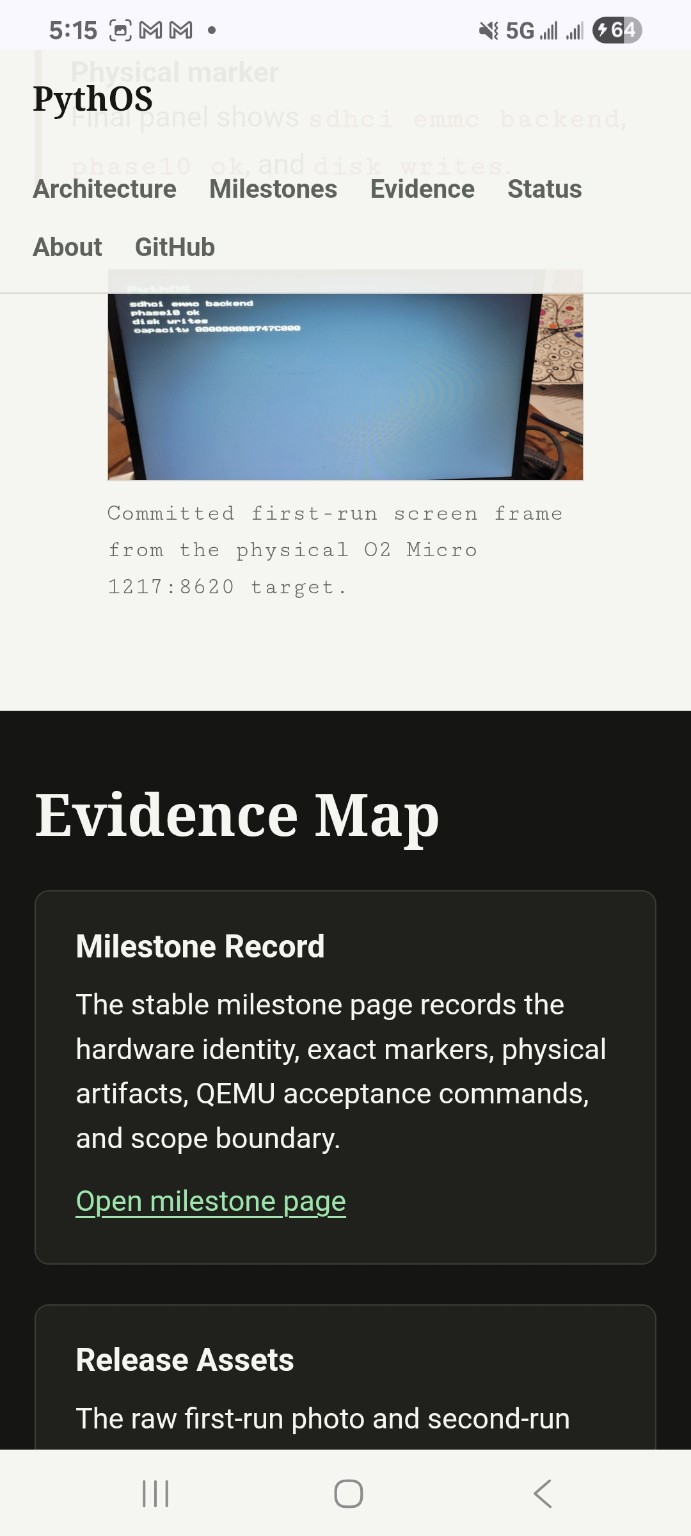
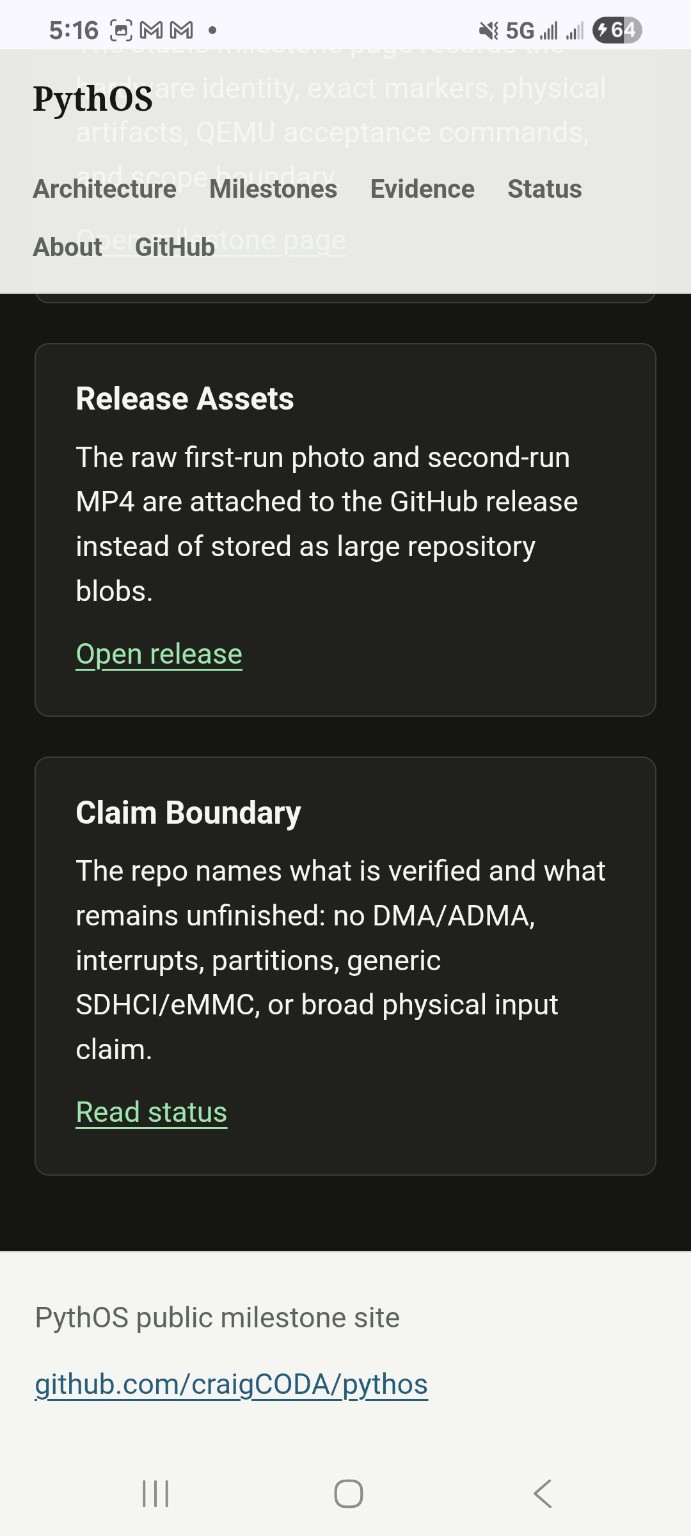
Narrow public documents make the claim boundary inspectable without substituting a broader compatibility assertion for the documented physical path.
Technologies
- Rust
- x86-64
- UEFI
- QEMU
- Python acceptance harnesses
- Capability-based design
- Persistent typed objects
Current boundary / unfinished work
This is not a claim of universal hardware support.
Later presentation and input bridges, networking, AI work, remote registries, and SMP remain outside the supplied Phase 13 credential boundary; they are named as later scope, not abandoned work.