Conventional windows expose applications, but they do not give spatial objects, relationships, behavior, and persistent state durable semantic identity.
What I built
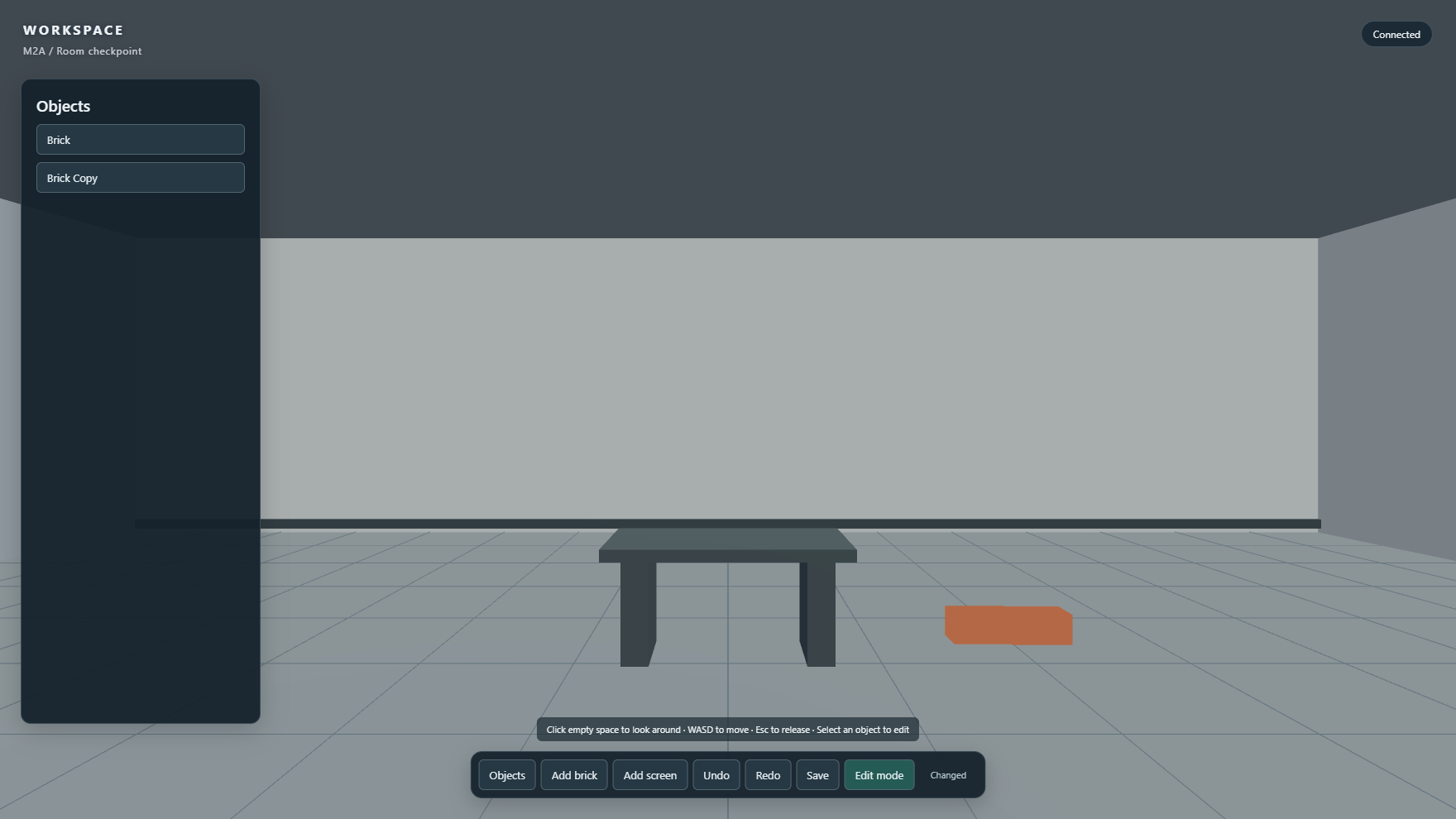
The current vNext runtime foundation and M2A room checkpoint direction, with spatial objects, direct manipulation, persistence, and a Windows-first host boundary.
Architecture / decisions
World Core owns durable truth.
01 / StateWorld Core owns durable truth for spatial objects, relationships, behavior, and persistence.
02 / RenderThree.js stays in the trusted renderer rather than becoming the source of durable state.
03 / BoundaryDescriptors and resource updates cross validated boundaries.
04 / HostFiles, processes, applications, network access, and credentials remain under host-controlled authority.
Evidence
Saved M2A room checkpoint: a real spatial-room state, not a finished product claim.
Result
A real spatial-room checkpoint and implemented authority model, not a claim that the final product is complete.
Technologies
TypeScript
Three.js
Electron
Node workspaces
Windows/.NET host direction
Tests and production packaging
Current boundary / unfinished work
The large application screen is a placeholder in this saved M2A room checkpoint; live generic Windows surface streaming was not complete at this checkpoint.