Problem
Physical layout, storage, movement, and training are difficult to reason about when they appear as disconnected records.
What I built
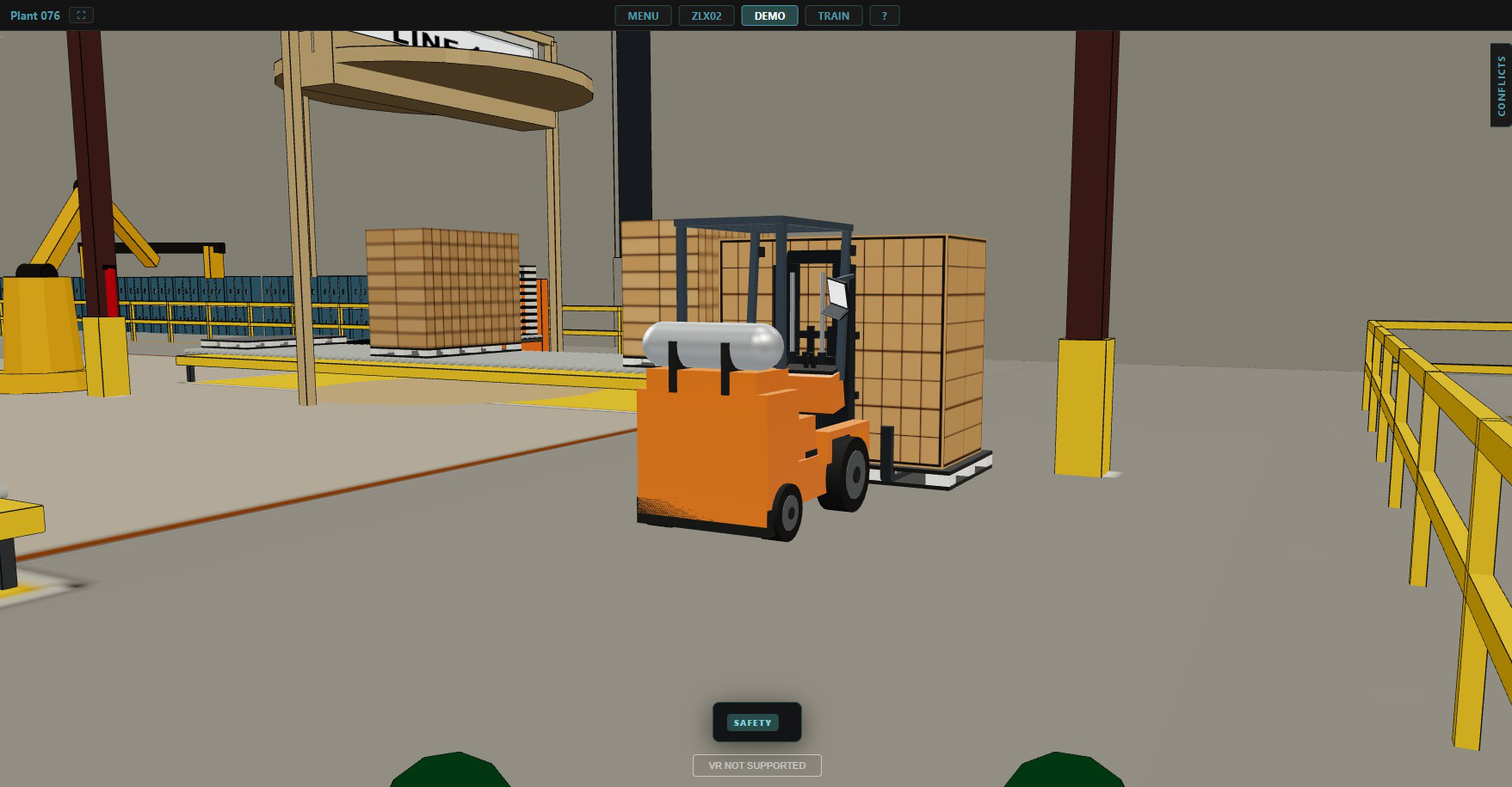
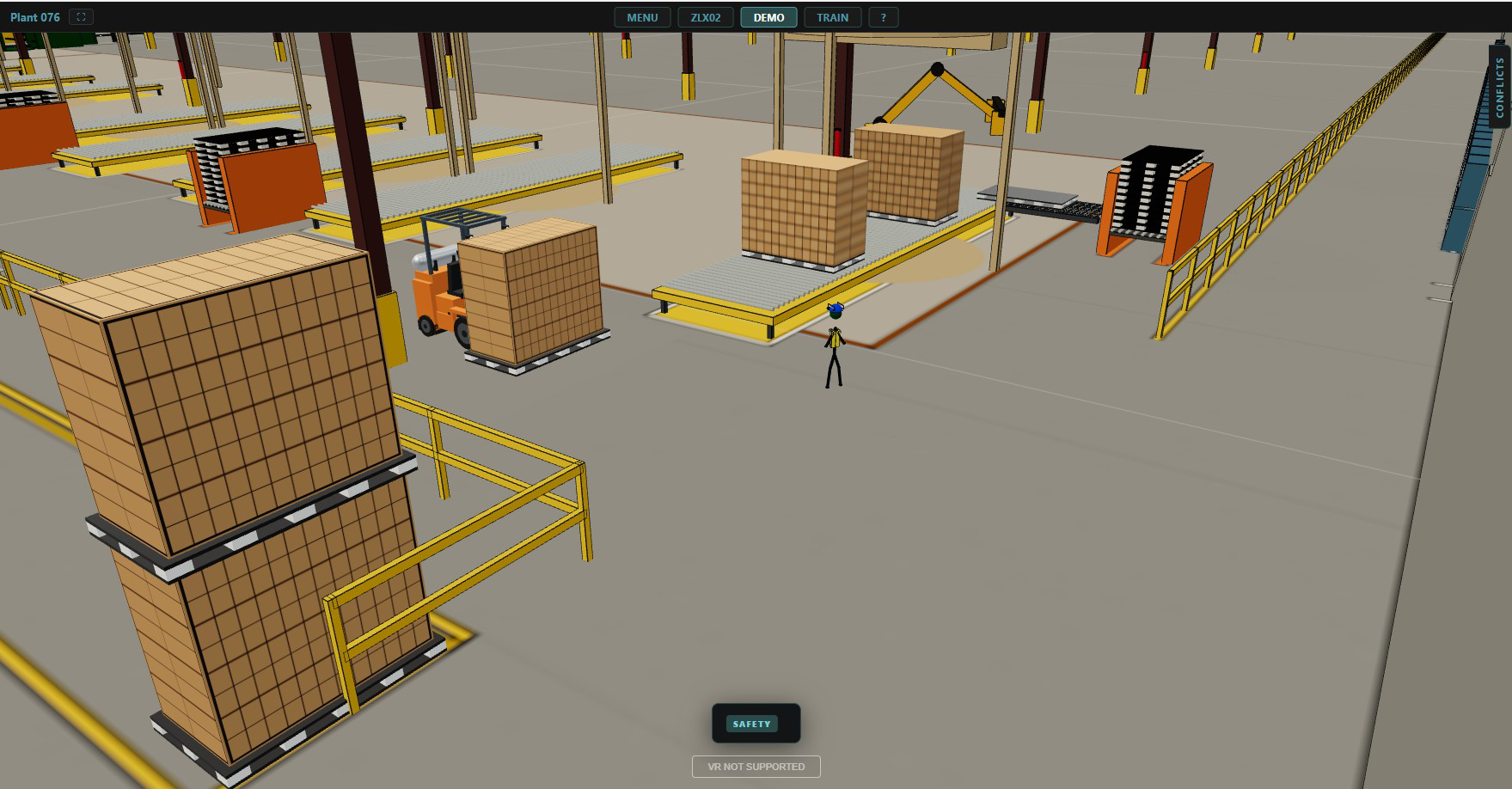
An offline-capable browser-based Three.js warehouse simulation with walking and forklift interaction, camera modes, PWA support, a WebXR-compatible browser direction, and Electron packaging.
- Modeled facility navigation
- Walking and forklift interaction
- Camera modes for inspection and training
- Browser, PWA, and Electron delivery paths
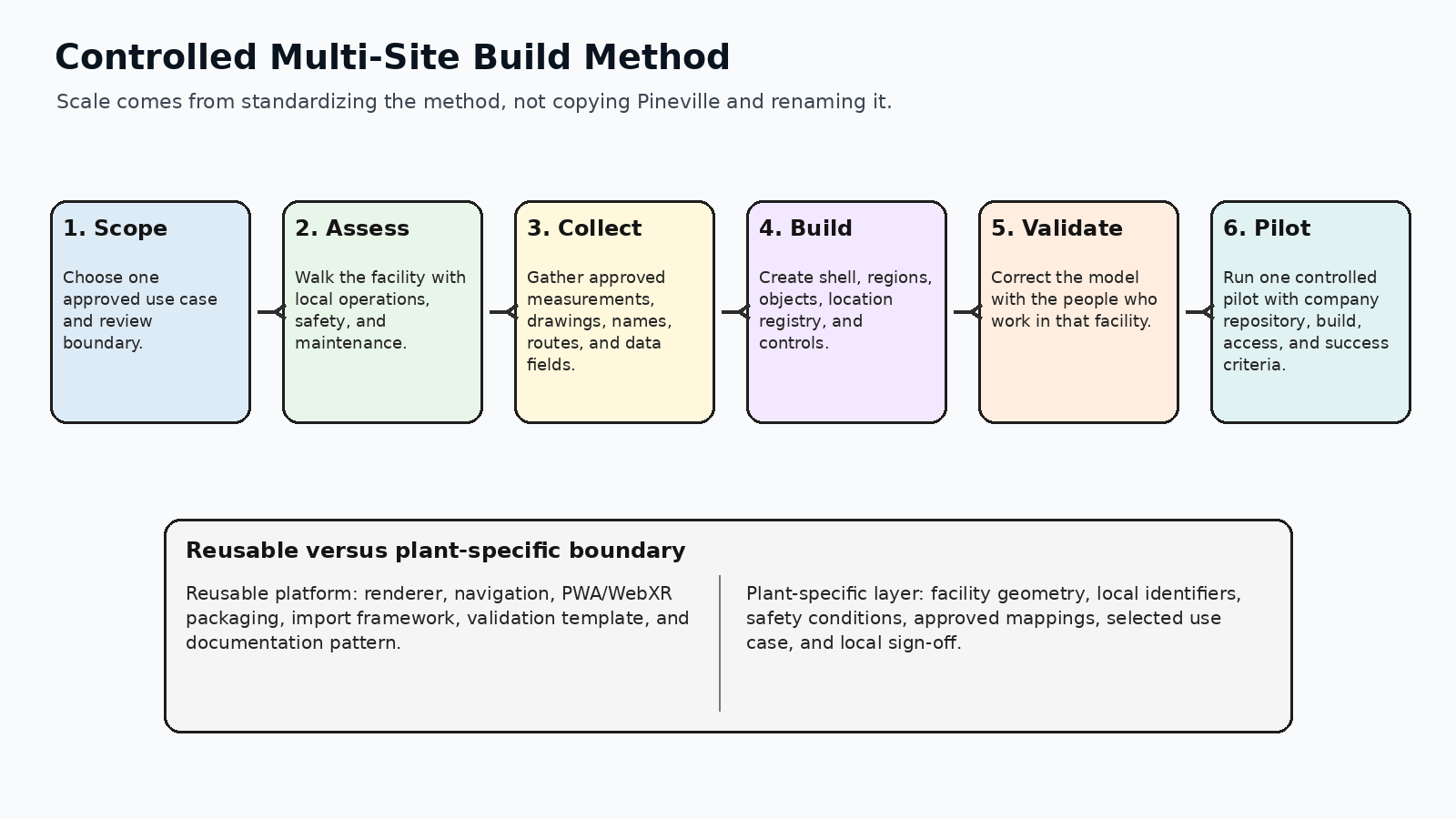
Architecture / decisions
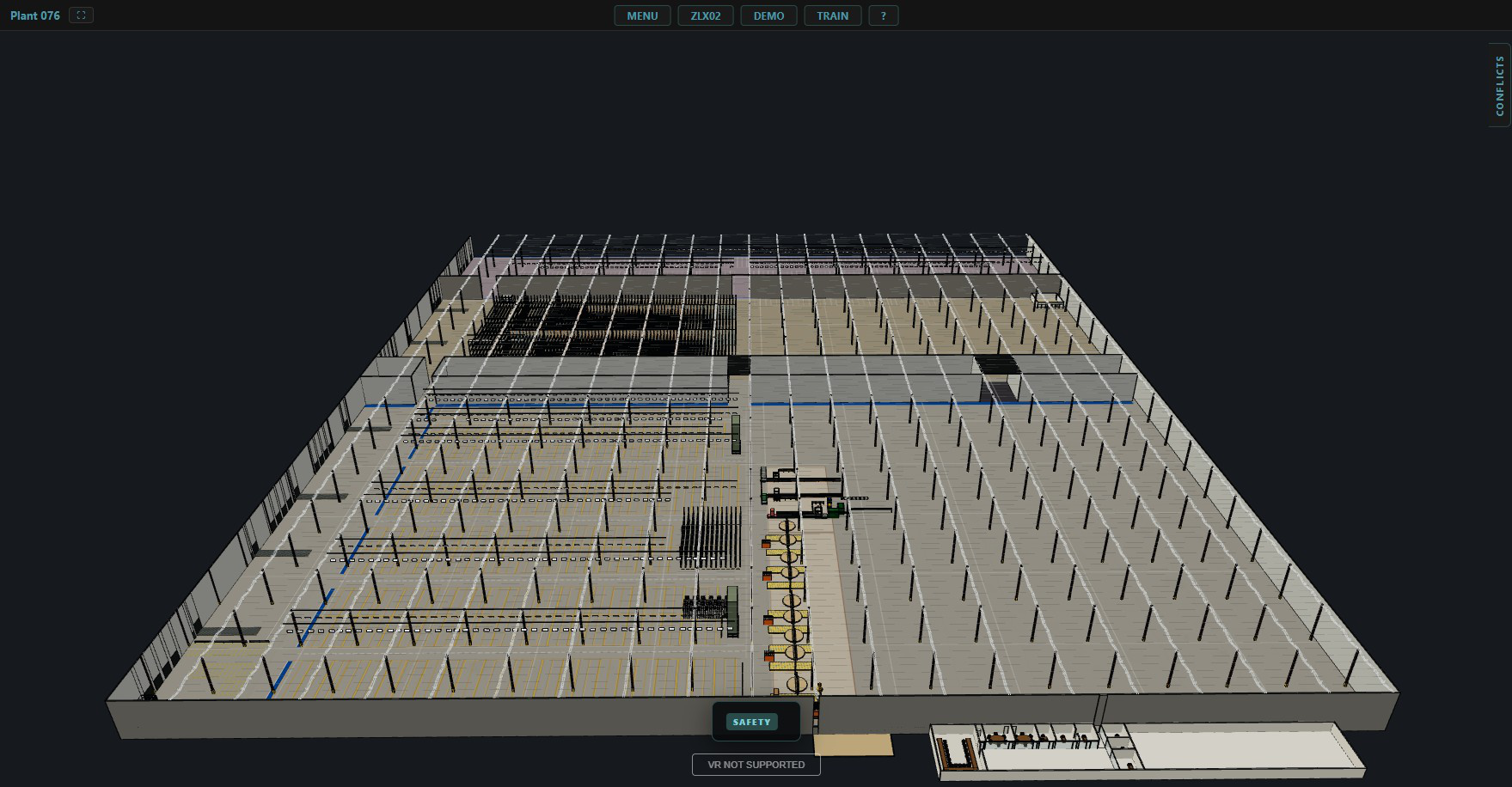
Physical regions are modeled as regions with meaning: storage, staging, movement paths, safety boundaries, and operating context.
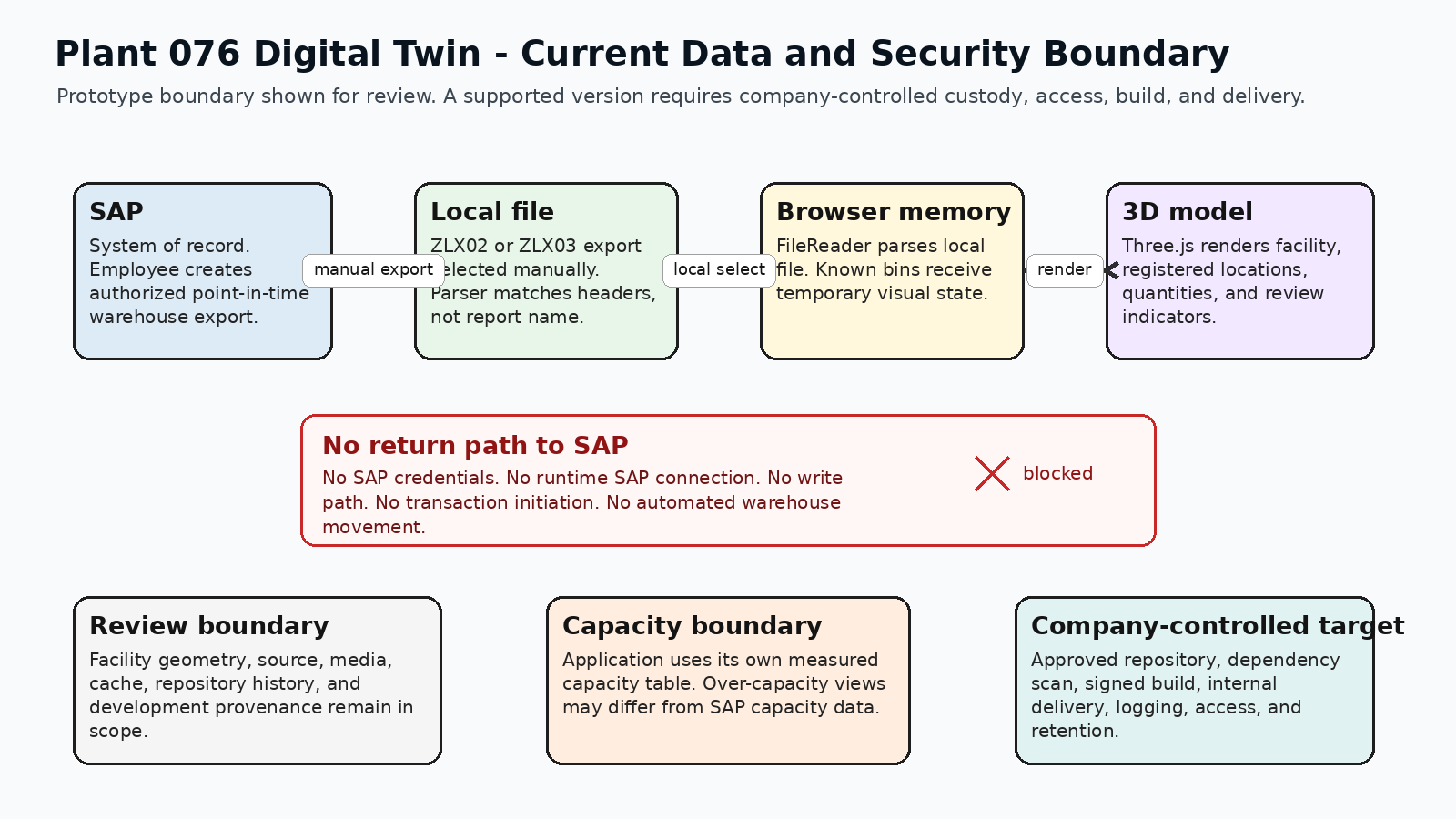
The supported data boundary is deliberate: manual export to local parsing to visualization. There is no SAP return path.

Evidence
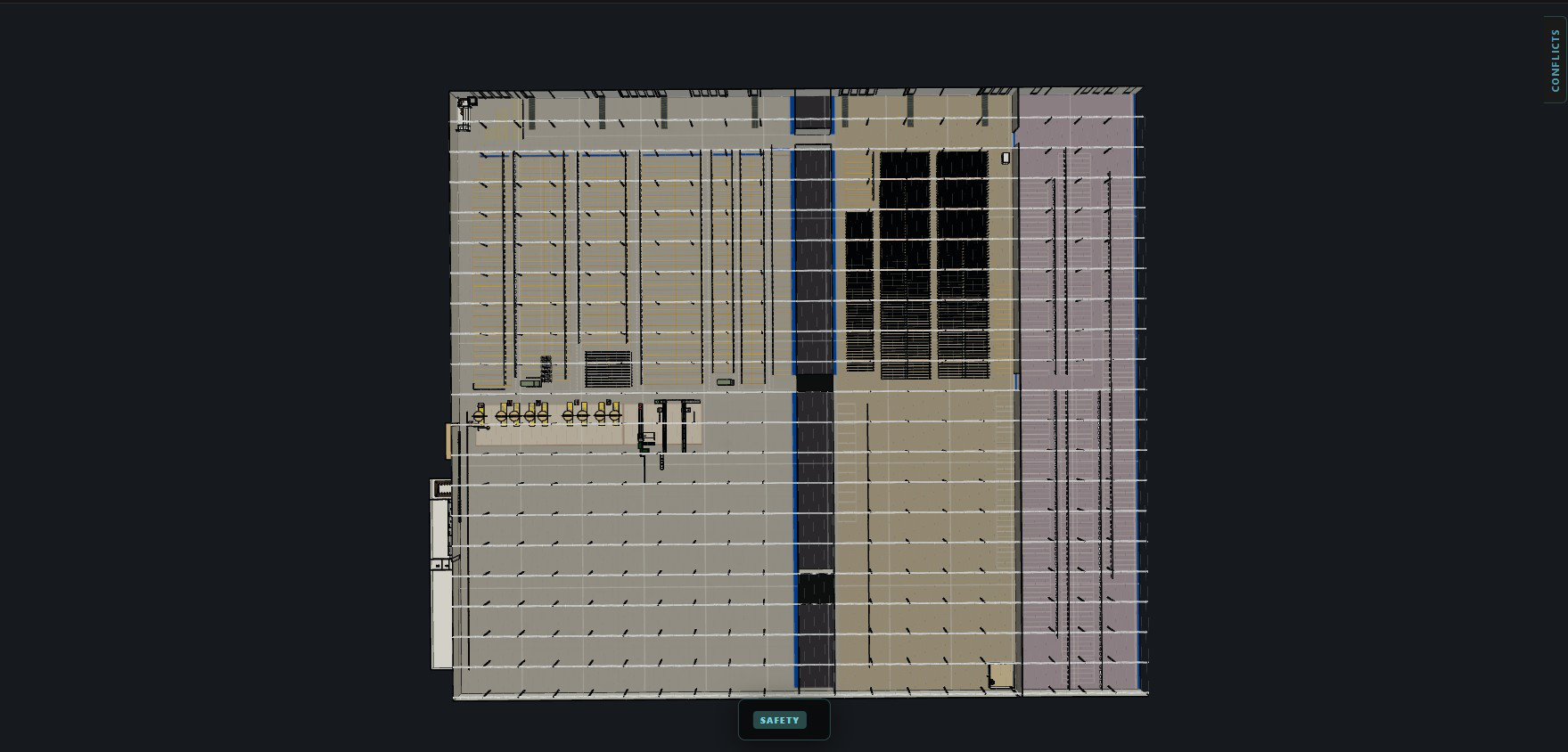
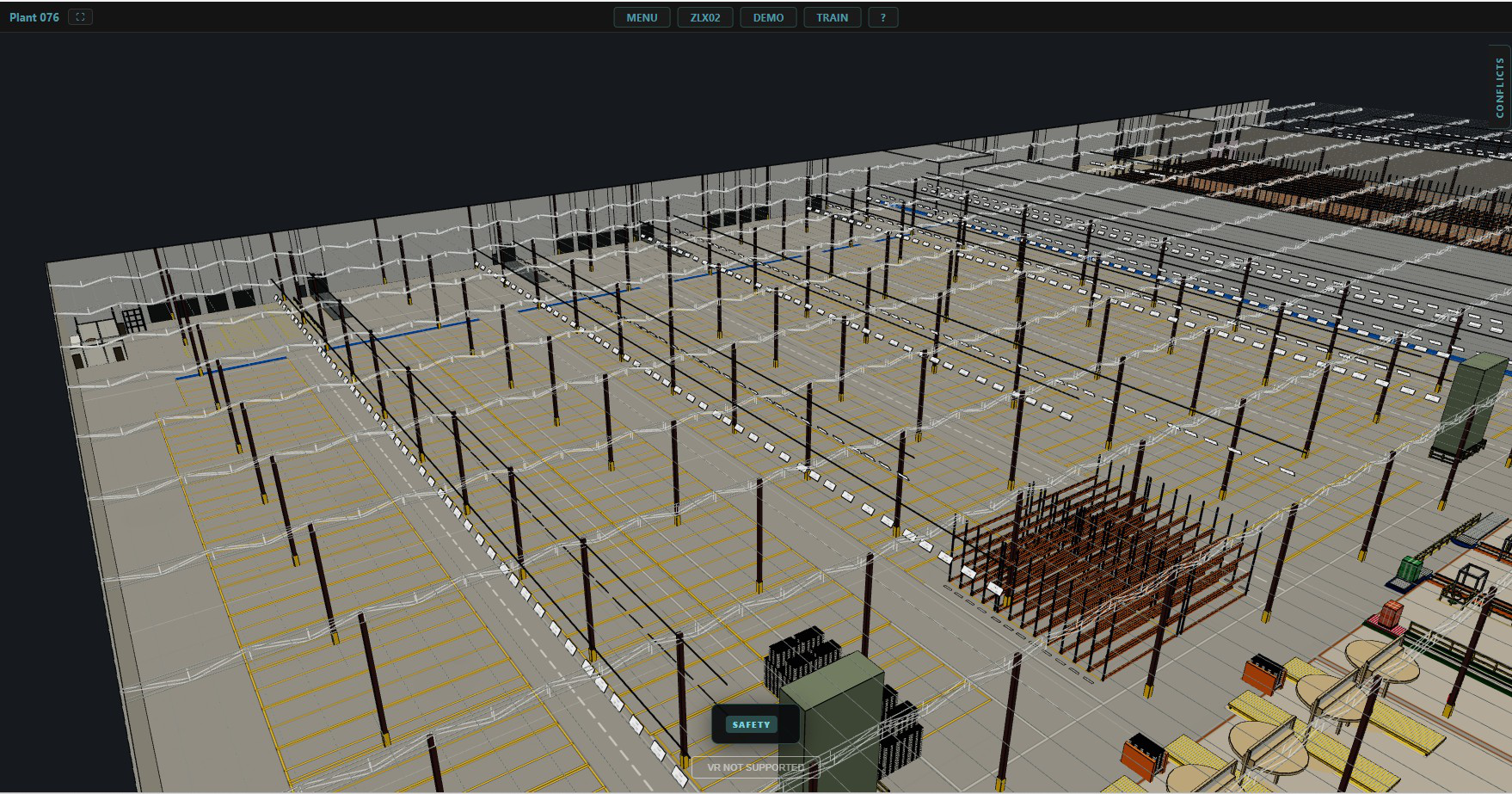
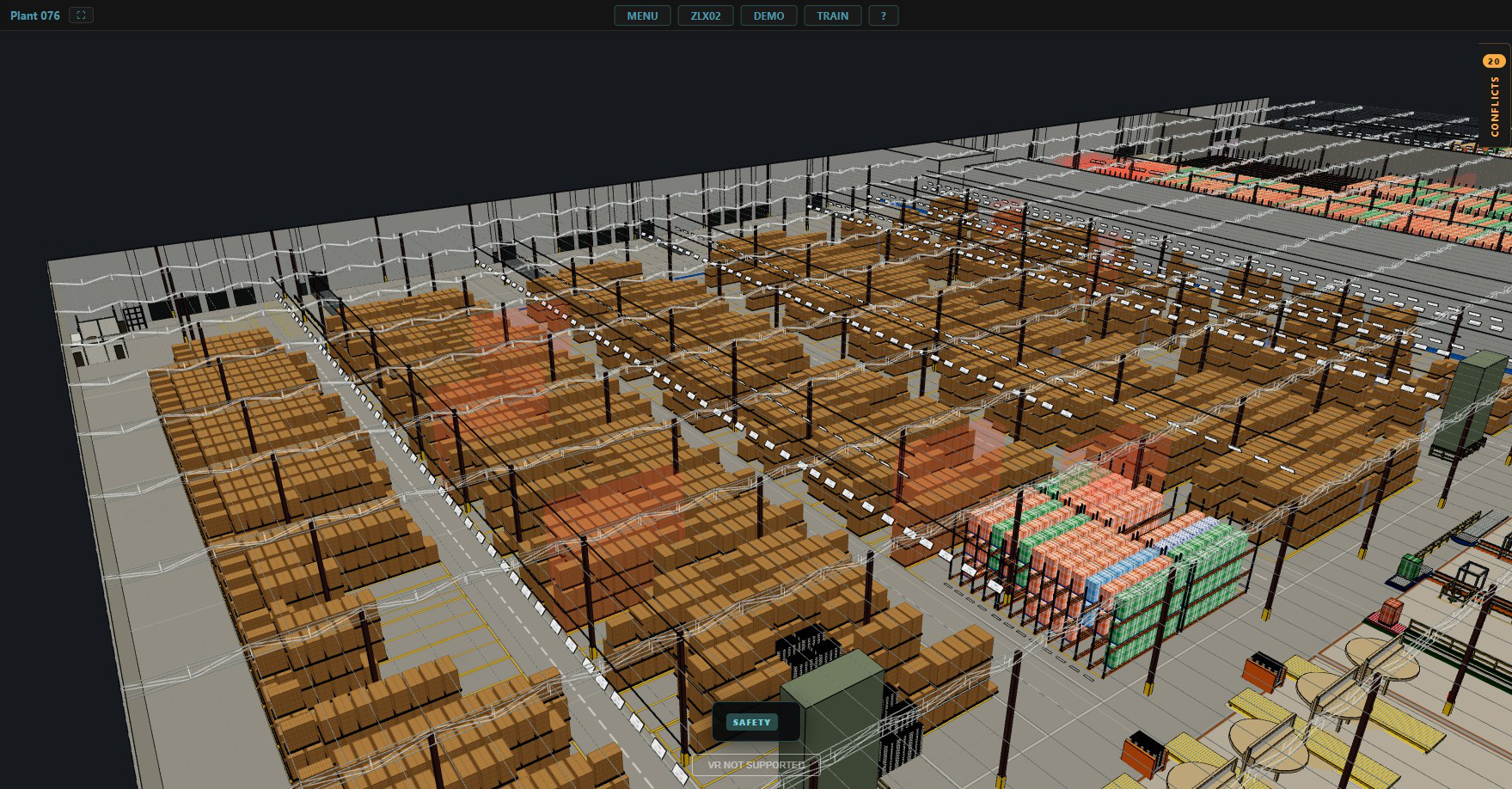
Spatial evidence makes the distinction between structure, occupancy, and operational relationship visible without flattening them into a record list.
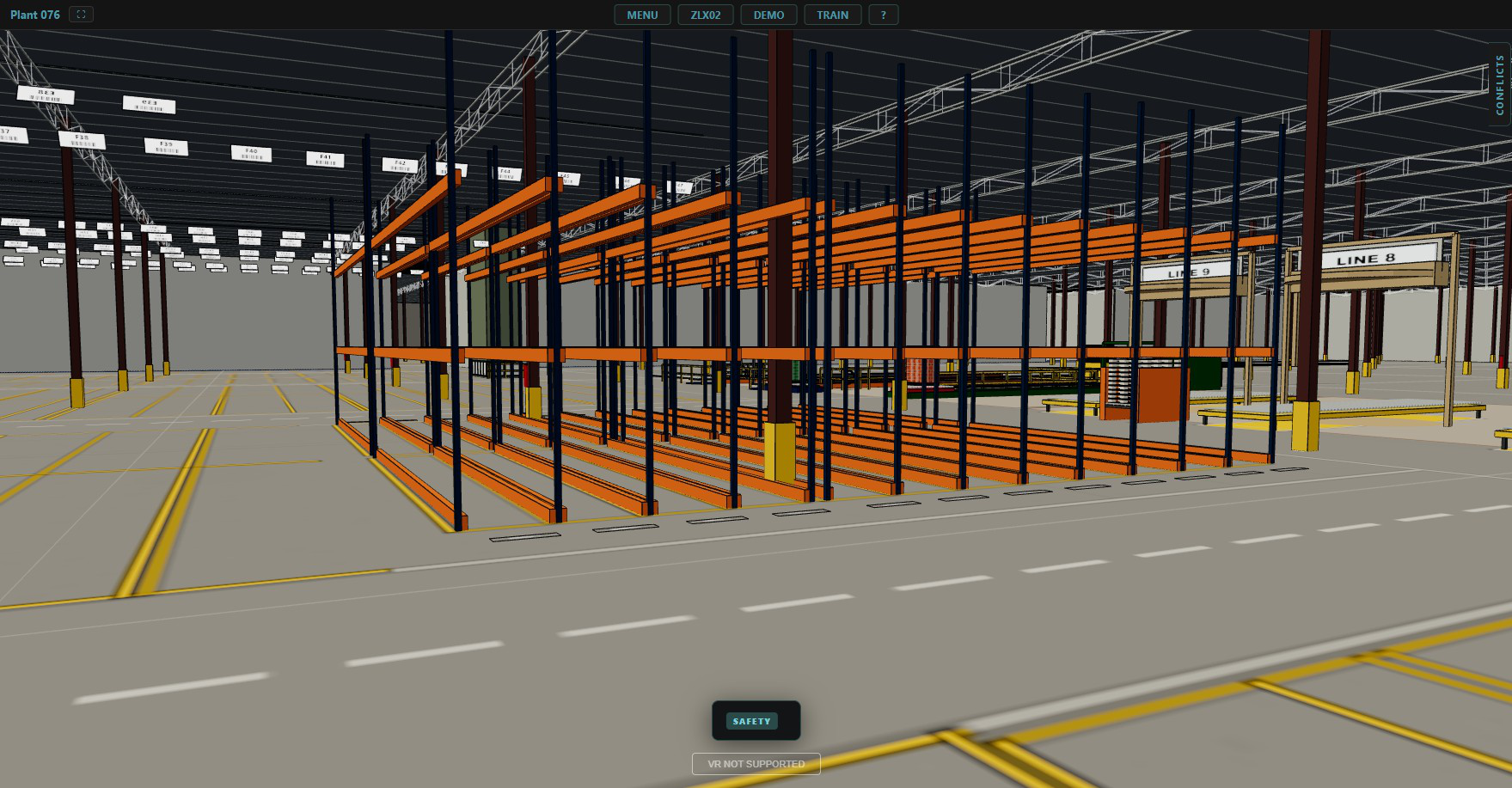
Matched views show the same camera before and after a supported local import visualization; detail views distinguish rack positions from floor-bin areas and place movement in context.
Result
The software makes spatial occupancy and operating relationships inspectable. It does not present warehouse-optimization results; that decision-support work is separate.
Technologies
- Three.js
- JavaScript
- CSS
- PWA and service worker
- WebXR-capable browser path
- Electron
- Node build scripts
Current boundary / unfinished work
This is a simulation and decision/training aid, not a live bidirectional SAP client. Optional movement capture is not required for the initial site.